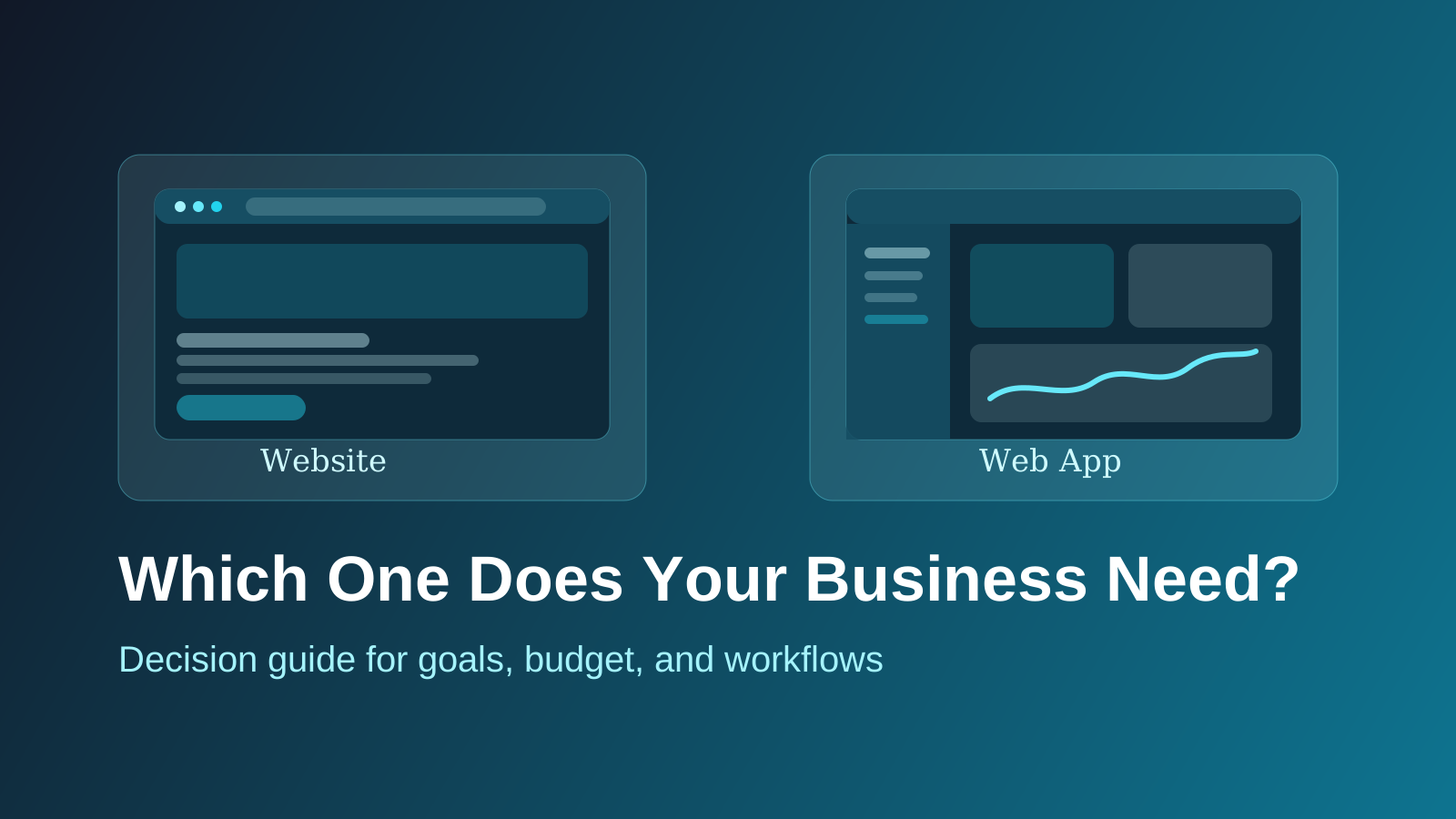
People use "website" and "web app" interchangeably, but they're actually pretty different things. Knowing which one you need will save you a lot of time and money, because building the wrong one means starting over.
Let's keep this simple.
The Basic Difference
A website is something people visit to read and browse. It's informational. Think of a company's homepage, a restaurant menu, or a blog. Visitors look at what's there and move on.
A web app is something people visit to do things. It's functional. Think of your online banking, a project management tool, or an e-commerce store with a seller dashboard. Users log in, interact with data, and get work done.
You know how Google's homepage is basically a website (it shows you a search bar), but Gmail is a web app (you're reading, composing, organizing, and managing email)? Same company, very different products.
How to Tell Which One You Need
Here are a few questions that make the answer pretty clear:
Do people need to log in? If your users need accounts, profiles, or personalized views, you're probably building a web app (or at least a hybrid with a web app component behind the login).
Is the main activity reading or doing? If visitors come to learn about your business and contact you, that's a website. If they come to manage appointments, track orders, submit reports, or interact with other users, that's a web app.
Could a spreadsheet replace it? If your team is currently doing something in spreadsheets or email that would be better as a dedicated tool, a web app can automate and improve that workflow.
What This Means for Your Budget
This is where it matters most. Websites and web apps have very different price ranges.
Across the industry, a custom business website typically costs $5,000 to $15,000 at an agency. Web applications are significantly more, with most ranging from $25,000 to $150,000+ depending on complexity. The industry average for a mobile app project is around $90,000.
Those numbers are what most agencies charge. At a smaller studio like ours, costs are much lower. Our websites start at $1,000 and web apps start at $2,500 for simple builds. Your actual cost depends entirely on what you're building. A straightforward business site with five pages is a very different project than an e-commerce platform with inventory and shipping, even though both are technically "websites." We give you a fixed quote based on your specific needs so there's no guesswork.
A well-built web app can automate hundreds of hours of manual work, open new revenue streams, and give your business a real competitive advantage. The key is scoping it right so you're not overpaying for features you don't need yet.
The Combo Approach
A lot of businesses need both, and that's completely normal. You might need a public marketing website that explains what you do and attracts visitors, plus a web application behind a login where customers (or your team) actually use your product or service.
Think of it like a storefront. The website is your window display and front entrance. The web app is the actual store where transactions happen.
We build these as a single project all the time. The public site and the application share the same design, the same hosting, and the same codebase. This keeps things consistent for users and simpler (and cheaper) to maintain.
A Common Mistake
People sometimes try to turn a website project into a web app halfway through, or vice versa. This almost always ends badly. The architecture, the planning, and the budget for these two things are fundamentally different.
If you're not sure which category your project falls into, figure that out before you start building. It's the kind of question that should get answered in the first conversation with whoever you hire.
Not Sure? Let's Talk
We help people sort this out every week. Sometimes what seemed like a big web app turns out to be a simple website with one interactive feature. Sometimes a "simple website" is actually a full application once we dig into the requirements.
Either way, it's better to figure this out early than to learn the hard way three months into development. Book a call and we'll help you think it through.