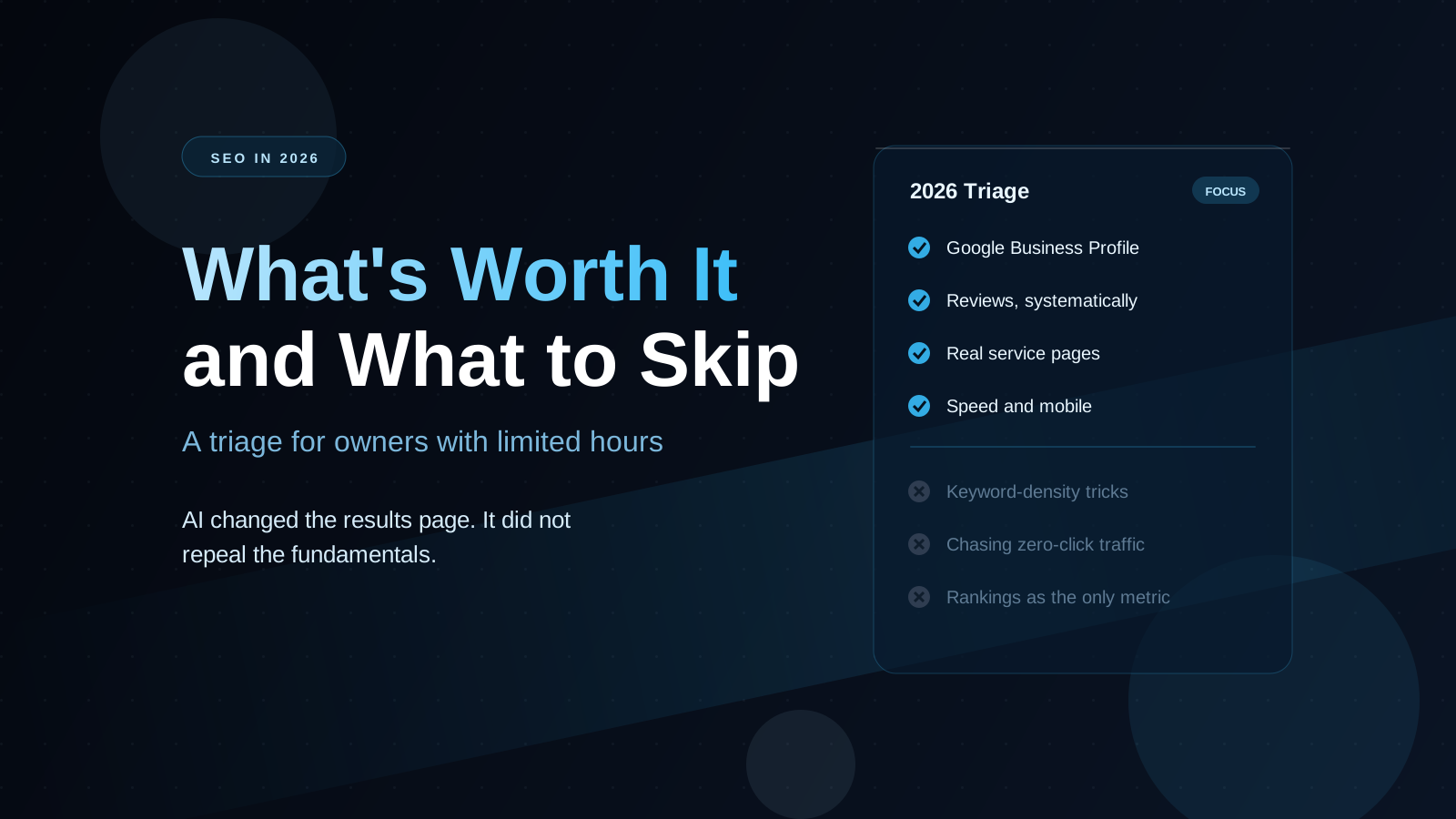
SEO advice has always been noisy. In 2026, it is noisy and contradictory: half the industry says AI killed SEO, the other half is selling a new "AI optimization" package that looks suspiciously like the old SEO package with a new label.
Here is the calmer version. Search changed, genuinely. The fundamentals mostly did not. What changed is which tactics still pay for themselves — and for a small business with limited hours, that triage is everything.
We covered the basics in SEO for new websites and the AI side in how we make businesses visible in AI search. This post is the prioritized 2026 view: worth it, situational, and skip.
What Actually Changed
Two shifts matter for small businesses:
More questions get answered without a click. Google's AI overviews, ChatGPT, and Perplexity summarize answers directly. Generic informational traffic ("how often should gutters be cleaned") increasingly stays on the results page.
AI assistants recommend specific businesses. When someone asks "who should I call for gutter repair near Loveland," the assistant names names. It pulls those names from the same signals search always used: clear service descriptions, location signals, reviews, and reputation.
The upshot: broad informational traffic is worth less, and being clearly identifiable — who you are, what you do, where, and how well — is worth more.
Worth Your Time in 2026
These earn their hours, roughly in order.
1. Your Google Business Profile
Still the highest-ROI hour in local SEO. Complete every field, add real photos regularly, answer questions, and post occasionally. Both the map pack and AI assistants lean heavily on it.
2. Reviews, systematically
Reviews are now a three-way signal: they convince humans, they feed map rankings, and AI assistants read and summarize them. "Ask every happy customer, respond to every review" is a system, not a nicety. A steady trickle beats a burst.
3. Service pages that actually describe the service
One page per real service, written in the words customers use, covering what it costs (even ranges), how it works, and where you do it. This is simultaneously classic SEO, AI-search food, and sales copy. It is the single best content investment a service business can make.
4. Questions with commercial intent
Content still works — but pick questions where the answer naturally leads to hiring someone. "Signs your electrical panel needs replacing" attracts a hirer. "History of the electrical panel" attracts a browser whose question AI already answered. Write fewer, better pieces aimed at the first kind.
5. Speed and mobile experience
Unchanged and non-negotiable. Slow mobile sites lose rankings and leads alike. We wrote a full guide on fixing performance without a rebuild.
6. Structured data
Markup for your business type, services, reviews, and FAQs helps both classic search and AI systems parse who you are. Quiet, unglamorous, increasingly load-bearing.
Situational
- Blogging weekly. Valuable if you target real questions your buyers ask; wasted if it's generic filler to "stay active." Cadence matters less than intent.
- Link building. Real local links — chamber, suppliers, sponsorships, trade associations — still help. Paid link schemes are a bigger liability than ever.
- Social media. Not a direct ranking factor, but assistants and customers both notice an active, consistent presence when judging whether you're real and current.
Skip in 2026
Permission to stop worrying about:
- Keyword density and word-count targets. Modern systems read meaning, not repetition.
- Chasing high-volume informational keywords. That traffic increasingly never leaves the results page. Let it go.
- Separate "AEO/GEO packages." Being visible to AI search is mostly being a well-structured, well-reviewed, clearly described business online. If someone sells it as a separate dark art with its own invoice, ask what specifically they do that good SEO doesn't.
- Monthly ranking reports as the success metric. Rankings wobble by the day and by the asker. Track qualified leads and which pages produce them.
The One-Afternoon Version
If you only do four things this quarter:
- Complete and refresh your Google Business Profile
- Set up a simple ask-for-review habit after every job
- Rewrite your weakest service page to genuinely describe the service, with prices and area
- Test your site on your own phone, on cell data, and fix what's slow
That is unglamorous work. It is also most of what "SEO in 2026" actually is for a small business.
Final Thought
Every time search shifts, the loudest voices declare everything changed and sell the cure. The durable strategy has not moved in a decade: be genuinely findable, describable, and trustworthy online, and remove the friction between finding you and contacting you.
AI raised the bar on clarity. It did not repeal the fundamentals.