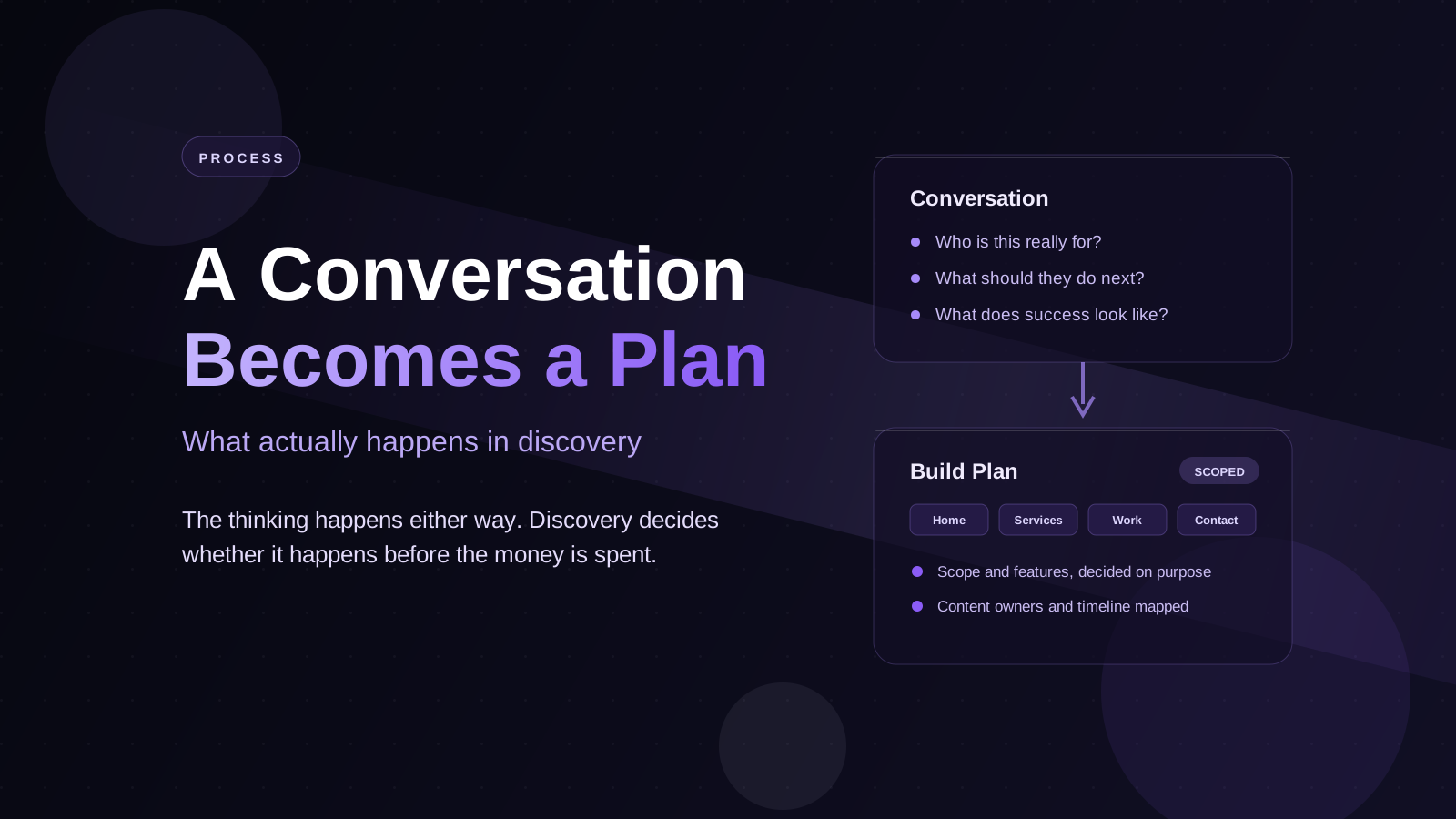
When people reach out about a website or app, they usually want to talk about design and price. Both fair. But the first real phase of a good project is neither — it is discovery.
Discovery is also the phase people most want to skip. It does not produce anything visual. It feels like talking when you want to be building.
Here is the thing, though: nearly every expensive project failure we have seen traces back to a discovery question that never got asked. The redesign that had to be redone because the real audience was different than assumed. The web app that launched with features nobody used while the one critical workflow was missing.
So here is what discovery actually involves, and why we will not skip it.
What Discovery Is Actually For
Discovery answers four questions before any design or code exists:
- Who is this for? Not "everyone." The specific person whose action pays for the site.
- What should they do? Call, book, buy, sign up — the one action that defines success.
- What has to exist to make that happen? Pages, content, features, integrations.
- What does success look like in numbers? So you can tell later whether it worked.
Everything else — sitemap, design direction, technical choices, budget — flows from those answers. Skipping discovery does not remove the questions. It just means they get answered by accident, mid-build, when changes are expensive.
Step 1: The Goals Conversation
Discovery starts with a conversation that is less about websites and more about the business:
- Where do customers come from today?
- Which jobs or sales are most profitable?
- What do people constantly ask before they buy?
- What is the site doing well or badly right now?
The answers usually reshape the project. A contractor who thinks they need a "modern redesign" often actually needs three service pages that rank, a gallery of finished work, and a faster path to a quote request.
Step 2: Audience and Action Mapping
Next, we get specific about visitors. Most small business sites serve two or three distinct visitor types — say, a homeowner comparing quotes, a property manager needing a reliable vendor, and a job applicant.
Each type needs different proof and a different next step. Mapping that now prevents the classic homepage failure: a page trying to talk to everyone and convincing no one.
Step 3: Content and Asset Audit
Then we take inventory of what exists:
- Which current pages get traffic and produce leads (those get preserved and improved)
- What photos, reviews, and credentials are available
- What content is missing and who will create it
This step exposes the most common project delay in the industry: content. Design and development are usually predictable. Waiting on photos and copy is what stalls launches. Finding the gaps in week one, instead of week nine, is worth a lot.
Step 4: Scope and Sitemap
Now the conversation turns into a concrete plan:
- A sitemap listing every page the site needs — and, just as important, the pages it does not
- Feature decisions with reasoning: booking, galleries, CMS, integrations
- What belongs in version one versus a later phase
This is where budget conversations get honest. Instead of a vague number for "a website," you can see exactly what is being built and what each piece is for.
Step 5: The Build Plan
Discovery ends with a written plan: the goals, the audience map, the sitemap, the feature list, the content responsibilities, and a timeline with real dependencies.
That document does two jobs. It aligns everyone before money is spent on design. And it becomes the yardstick for every decision later — when a mid-project idea comes up, the question is simply "does this serve the goal we wrote down?"
How Long Should This Take?
For a typical small business website, discovery is usually one good conversation. The steps above sound like a lot, but an experienced builder can cover goals, audience, content, and scope in a single focused session, then turn it into the written plan.
More complicated projects need more. A site with lots of custom functionality might take a few sessions. A web app takes the most — workflows and data need real mapping, which we covered in our web app planning guide.
If a provider quotes you a full custom project without asking any of the questions above, that is worth noticing. They are not skipping discovery. They are making you pay for it later, at change-order prices.
Final Thought
Discovery feels slow because it front-loads the thinking. But the thinking happens either way — the only choice is whether it happens on a whiteboard in week one or in a panicked email thread in week ten.
A good discovery phase is how a conversation becomes a build plan instead of a guess.